



- By Nirmal Ajwani
- 06 Aug 2026
BEST Unveils ₹28,000 Crore Redevelopment Plan for 22 Mumbai Bus Depots, Aiming to Modernize Public Transport
Major PPP Project Will Transform Bus Depots Into Modern Urban Hubs While Keeping Services Running
Mumbai's public transport system is set for a major upgrade as the Brihanmumbai Electricity Supply and Transport (BEST) undertaking has approved an ambitious ₹28,000 crore redevelopment plan for 22 bus depots across the city. The proposal is designed to strengthen BEST's financial position while creating modern transport hubs that offer improved public facilities and better commuter experiences.
The redevelopment proposal has received approval from the BEST Committee and will now be forwarded to the Brihanmumbai Municipal Corporation (BMC) before being submitted to the Maharashtra Cabinet for final approval.
22 Bus Depots to Be Redeveloped Across Mumbai
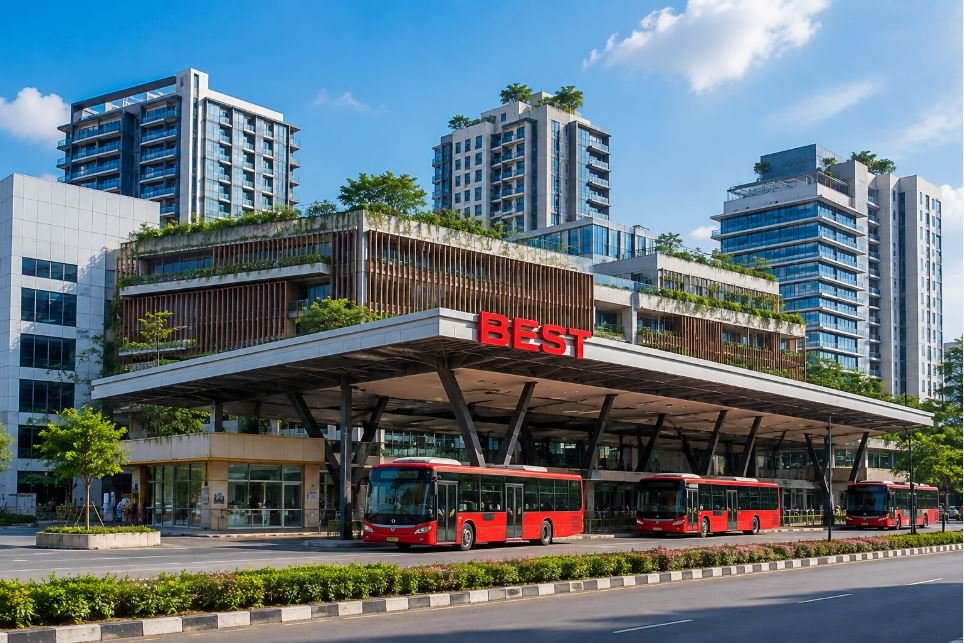
Under the plan, 22 ageing bus depots will be redeveloped into integrated urban hubs while continuing to function as operational bus terminals. The project will be implemented through the Design, Build, Finance, Operate and Transfer (DBFOT) model under a Public-Private Partnership (PPP), allowing private investment while ensuring that ownership of the land remains with BEST.
BEST currently owns 27 bus depots spread across nearly 7.70 lakh square meters of land, with a built-up area of around 2.51 lakh square meters.
Among these, Kurla depot has already been redeveloped. The Dharavi and Kalakilla depots have been allocated for the Dharavi Redevelopment Project, while the Anik and Pratiksha Nagar depots will support the Metro-11 project. The remaining 22 depots have now been selected for the new redevelopment initiative.
Modern Facilities Planned Beyond Transportation
The redevelopment plan is not limited to improving bus terminals. BEST aims to create mixed-use urban spaces that serve both commuters and local communities.
The proposed developments may include educational institutions, hospitals, public parking facilities and other important social infrastructure. At the same time, the bus depots will continue to operate, ensuring that public transport services remain uninterrupted.
Officials believe the project will help improve public convenience while generating long-term revenue for the transport undertaking.
KPMG Prepares Redevelopment Strategy
The redevelopment proposal was first presented to Maharashtra Chief Minister Devendra Fadnavis in June. Following the discussion, consulting firm KPMG was appointed to prepare a detailed strategy for the project.
To improve the financial viability of the redevelopment, BEST has requested an increase in the permissible Floor Space Index (FSI) from 1.3 to 7, similar to the development model used for Mumbai Metro-3 projects.
According to BEST General Manager Sonia Sethi, the initiative is part of a broader transformation plan for the organization. She said the project will create sustainable revenue while adding valuable public infrastructure across Mumbai.
₹28,000 Crore Plan Aims to Strengthen BEST's Future
BEST's proposal highlights the financial challenges currently faced by the undertaking. It has an accumulated deficit of ₹7,322 crore and total liabilities of ₹14,323 crore.
In addition, the organization estimates that purchasing and operating 5,000 self-owned buses, along with meeting employee-related commitments, will require another ₹13,561 crore. Together, these requirements bring the total financial plan close to ₹28,000 crore.
To support long-term financial stability, BEST plans to use the upfront premium received from private developers to reduce liabilities, settle employee dues and purchase new buses.
The proposal also includes the creation of dedicated Corpus and Recurring Funds to provide sustainable funding and reduce dependence on annual financial assistance from the BMC.
Global Urban Development Model Inspires Project
BEST Committee Chairperson Trushna Vishwasrao said the redevelopment will unlock the value of prime land parcels while improving staff housing, public amenities and parking facilities.
Officials added that the redevelopment strategy has been inspired by successful transport-oriented development models in global cities such as Singapore, Hong Kong, Paris and Stockholm, where transport hubs have become vibrant mixed-use urban centers.
A New Chapter for Mumbai's Public Transport
The proposed redevelopment marks one of the largest modernization initiatives in BEST's history. By combining upgraded transport infrastructure with community facilities and sustainable financial planning, the project aims to create modern bus depots that better serve Mumbai's growing population while supporting the long-term future of the city's public transport system.