



- By Hitesh
- 21 Aug 2026
BMC Approves ₹702.44-Crore Underground Pedestrian Link from Mahalaxmi to Coastal Road
The Brihanmumbai Municipal Corporation (BMC) has approved a ₹702.44-crore underground pedestrian link that will connect the Science Centre Metro Station and Mahalaxmi Racecourse area with the Coastal Road Garden and Worli Promenade. The project aims to improve pedestrian access between Mumbai’s public transport network, recreational spaces and important city attractions.
The proposal was approved by the BMC Standing Committee despite strong objections from Congress, Shiv Sena (UBT) and Maharashtra Navnirman Sena (MNS) corporators over the use of civic funds.
Opposition Questions BMC’s Financial Burden
The main concern raised by opposition corporators was not the project itself but the financial responsibility being placed on the civic body.
Congress group leader Ashraf Azmi asked the administration to reconsider the proposal and highlighted the BMC’s existing financial commitments. He said projects worth around ₹2.5 lakh crore had been taken up during the four-year period of administrative rule, with about ₹8,000 crore still payable to contractors for completed works.
He also said another ₹28,000 crore would be needed over the next eight years for ongoing projects. According to Azmi, the BMC’s current revenue position may not be strong enough to comfortably take on another major financial commitment.
Azmi also questioned why the BMC should pay the full cost of a project being executed by the Mumbai Metro Rail Corporation Ltd. (MMRCL). He pointed out that the state government has yet to release a ₹10,000-crore grant and urged the civic administration to raise the issue with the government.
MNS group leader Yashwant Killedar also made it clear that his party was not against the infrastructure project. His concern was why the BMC should bear the expense.
Proposal Gets Majority Approval
The funding proposal faced criticism from several opposition corporators during the Standing Committee meeting.
Congress corporator Ajanta Yadav questioned the approval process and noted that construction work had reportedly started before the proposal was presented to the committee.
Shiv Sena (UBT) corporator Shraddha Jadhav also opposed the use of BMC funds for the project. However, corporators from the BJP-led Mahayuti alliance supported the proposal.
After a vote, the proposal was approved by majority, allowing the BMC to proceed with the financial commitment despite opposition from Congress, Shiv Sena (UBT) and MNS members.
1.518-Km Underground Pedestrian Passage Planned
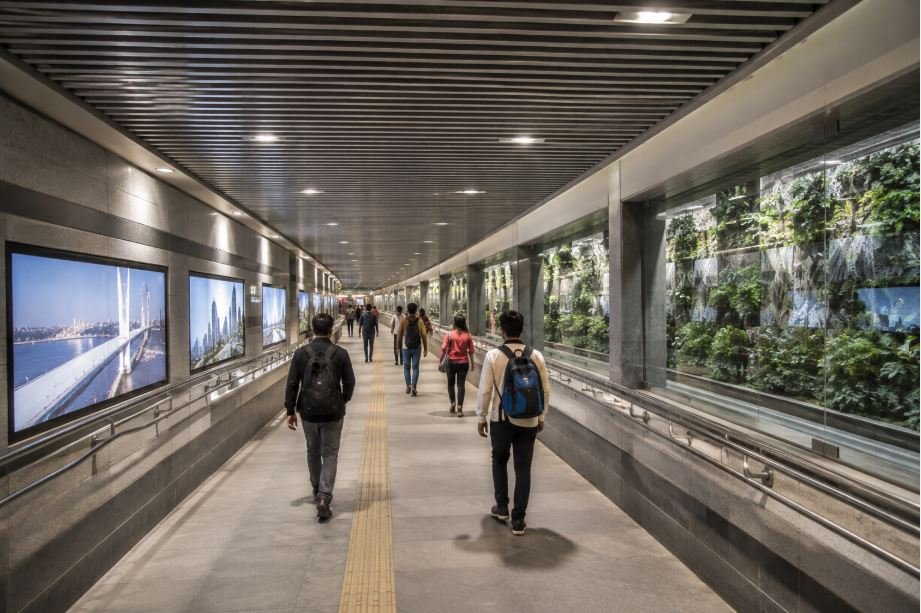
The proposed underground pedestrian link will stretch approximately 1.518 km. It will connect the Science Centre Metro Station on the Aqua Metro Line with the 175-acre Coastal Road Garden and promenade through the Mahalaxmi Racecourse area.
The passage is planned beneath Racecourse land that has been handed over to the BMC. It will pass below the existing racetrack and the proposed public garden, allowing both facilities to continue operating without major surface-level disruption.
The underground corridor will feature six entry and exit points and have a pedestrian width of 7.5 metres. The design is intended to create a direct and convenient walking connection between the Metro station, Racecourse, Coastal Road and nearby attractions.
Project Linked to Transit-Oriented Development
The project comes under TOD Clause 33(23) of the Development Control and Promotion Regulations (DCPR) 2024.
According to the proposal, the construction cost is expected to be recovered through a Transit-Oriented Development premium linked to incentive Floor Space Index (FSI). This mechanism is designed to connect infrastructure development with the additional development potential created around transit corridors.
The approach could help Mumbai improve pedestrian infrastructure while making better use of its expanding Metro network.
Better Access to Mumbai’s Major Attractions
The underground connection is expected to improve access to several important destinations around Mahalaxmi and the Coastal Road.
These include the Mahalaxmi Racecourse, National Sports Club of India, proposed theme park, Mahalaxmi Temple and Haji Ali Dargah. It will also provide easier access to the Coastal Road Garden and promenade, which are emerging as major recreational and tourism spaces in South Mumbai.
By connecting these locations with the Metro network, the project could encourage more visitors to use public transportation instead of relying entirely on private vehicles.
Haji Ali Parking Facility Could Strengthen Connectivity
A proposed parking facility at Haji Ali, with capacity for around 1,100 cars and buses, is also expected to support the broader connectivity plan.
Visitors could park near Haji Ali and use the Metro to travel toward South Mumbai destinations. This could create a more integrated connection between road transport, Metro services, tourism sites, religious landmarks and recreational areas.
For a city where road congestion and limited pedestrian space remain persistent challenges, better integration between public transport and walking infrastructure can have significant long-term value.
Balancing Infrastructure Needs and Civic Finances
The approval of the ₹702.44-crore project highlights a familiar challenge for Mumbai: how to expand modern infrastructure while managing the financial pressure on the civic administration.
The underground pedestrian link has the potential to make travel between Metro stations, public spaces and major attractions easier and safer. At the same time, the questions raised by opposition corporators underline the need for financial transparency and careful management of public funds.
If implemented efficiently, the project could become an important pedestrian connection between Mahalaxmi and the Coastal Road, while strengthening Mumbai’s wider push toward Metro-based and pedestrian-friendly urban mobility.