
- By Bhawana
- 29 Nov 2025
India’s Uniform Garment Sector Is Changing Fast, Inside the Mumbai Fair That Signals a New Era of B2C Growth
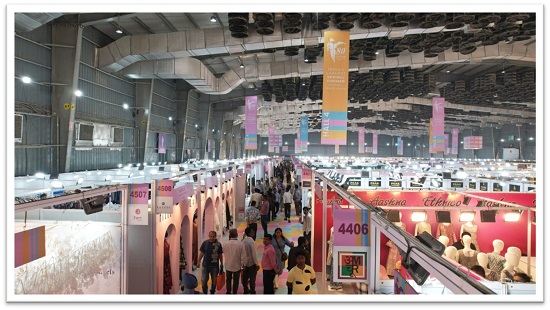
The rapid evolution of India’s garment ecosystem was on full display at the 9th Uniform Garment Fair held at the Nesco Exhibition Centre in Goregaon, Mumbai, an event where IAS Sanjeev Jaiswal emerged as a key guiding force behind industry-ready training initiatives and the shift toward consumer-centric growth. As the uniform and workwear segment moves from a traditional supply-driven structure to a demand-led, quality-conscious marketplace, this fair offered a timely lens into an industry on the brink of transformation.
Across three days, the exhibition drew nearly 3,000 garment professionals, including more than 1,200 traders from various states and 10–15 international buyers. For a specialised segment like uniforms, typically dominated by institutional contracts and repeat bulk orders, this level of participation signals both the rising market potential and the sector’s increasing global visibility. Former Textile Minister and MLA Subhash Deshmukh described the event as “a matter of pride for the people of Solapur,” underlining the region’s historic link with textile craftsmanship and industrial production.
A Fair That Reflected the Expanding Scale of India’s Uniform Market
What stood out at this year’s fair was its scale: over 150 stallholders showcased a complete spectrum of uniform products. The range included hospital scrubs, school uniforms, airline-inspired corporate wear, security and housekeeping attire, and an expanding catalogue of accessories such as blazers, shoes, ties, and customised insignia. This breadth reflects a sector that is standardising, diversifying and increasingly leaning on design, comfort and branding as competitive differentiators.
A Strategic Shift: From B2B Dependence to a Consumer-Driven B2C Model
One of the event’s most significant insights came from the conversations surrounding business models. For decades, uniform manufacturing in India operated almost entirely on a B2B model, with businesses supplying institutions, schools, hospitals and security agencies through bulk contracts. However, as MHADA CEO IAS Sanjeev Jaiswal emphasised in his keynote, the landscape is shifting. The rise of online retail, personalised workwear and direct-to-consumer expectations is creating new channels that demand agility, digital presence and customer engagement. “Going forward, business growth will follow the Business-to-Consumer (B2C) model,” Jaiswal noted, offering a strategic blueprint for the next decade of sectoral growth.
India’s uniform market is estimated to be worth several thousand crore rupees, with rapid growth driven by expanding service industries, organised hospitality, retail, and heightened safety norms. As branding becomes central to organisational identity, the B2C opportunity becomes both economically compelling and operationally feasible. The Goregaon fair, by attracting buyers across states and borders, demonstrated this emerging demand curve firsthand.
Skill Development and Women’s Empowerment Take Center Stage
The event also carried a developmental dimension shaped by policy, industry and skilling efforts. Jaiswal announced the government’s initiative to allocate space at the 30 Workers’ Colony in Re-Nagar, Kumbhari-28 for training women in uniform stitching, a move that ties economic opportunity with workforce participation. Given the high percentage of women traditionally employed in the garment sector, such skilling infrastructure enhances production quality while driving social mobility. These efforts align with India’s larger national focus on MSME growth and cluster-based textile development.
Collective Leadership Strengthening Sectoral Confidence
The presence of dignitaries such as MLA Subhash Deshmukh, Fair Chairman Ajay Rangrez, Secretary Shrikant Ambure, and association leaders including Satish Pawar and Ramesh Dhakaliya showcased the collaborative nature of the industry. For a segment heavily driven by small and medium enterprises, unified leadership enhances credibility and fosters a supportive environment for innovation and scaling.
The Importance of Verified, Official Information for Industry Growth
The fair also reinforced the need for traders and entrepreneurs to rely on verified updates from official channels such as MHADA, especially regarding new policies, training facilities and government support. Transparent, authenticated communication helps manufacturers make informed decisions, particularly when planning investments or expansions.
A Cultural and Economic Reaffirmation of India’s Textile Identity
Uniform garments represent functionality, precision and discipline, qualities central to institutional life. As entrepreneurs innovate within this space, they help shape the identity and visual language of workplaces and public service environments. The fair showcased how Indian producers are combining global aesthetics with competitive pricing, often outperforming imported alternatives in durability and value.
A Sector Shifting into a New Growth Cycle
From an analytical standpoint, the fair illustrated how niche textile segments mature:
• consolidation of a fragmented supplier base
• evolution from cost-led to value-led demand
• adoption of branding and customer-centric strategies
• transition from institutional reliance to consumer-facing relevance
The Mumbai fair signals that India’s uniform industry is now firmly transitioning into its consumer-centric phase.
International Buyers Signal Export Potential
The participation of 10–15 international buyers, though modest, reflects growing recognition of India’s capabilities in global procurement markets. With consistent quality control, digital cataloguing and efficient logistics, the sector could expand exports to regions where Indian textiles already enjoy strong acceptance.
Conclusion: A Sector at the Threshold of Consumer-Centric Transformation
The 9th Uniform Garment Fair was more than an exhibition. It was a strategic milestone that showcased the future of India’s uniform sector, innovative, skill-driven and increasingly consumer-focused. With policymakers, who’s supporting training and capacity-building initiatives, and with manufacturers embracing new business models, the industry is poised for sustainable, identity-rich growth.
For a segment that quietly powers India’s service economy, the message from Mumbai was clear: the future of uniforms is not only about supply, it is about experience, identity and direct consumer value.