



- By Rupendra
- 20 May 2026
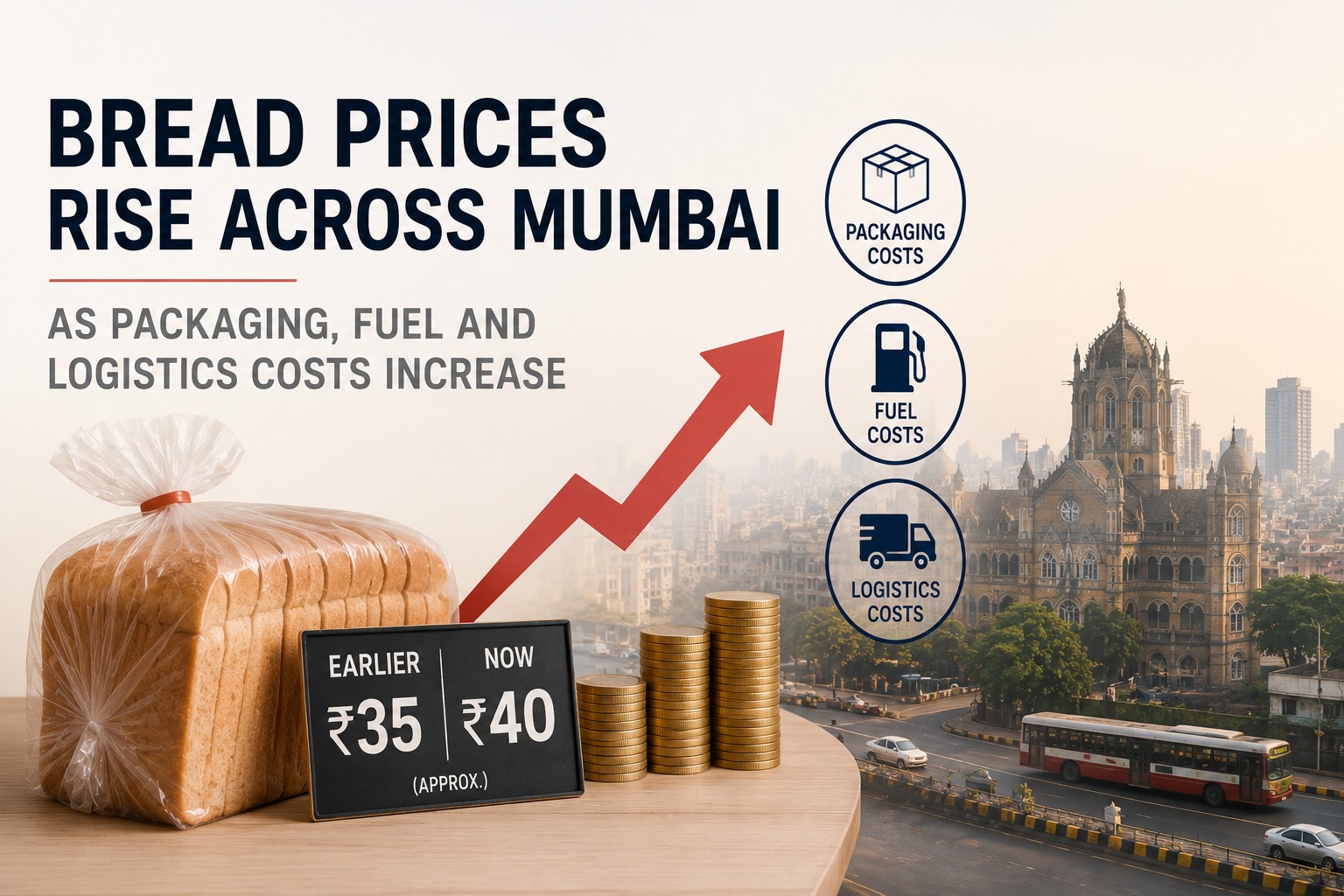
Bread Prices Rise Across Mumbai as Packaging, Fuel and Logistics Costs Increase
Residents across Mumbai are witnessing another increase in daily household expenses as bread prices have risen across the city and nearby areas. The latest revision comes after recent increases in milk and fuel prices, adding further pressure on monthly grocery budgets.
Major bread manufacturer Modern Bread has increased the prices of several popular bread variants by up to ₹5 per packet. Industry sources also indicated that brands such as Britannia Industries and Wibs may revise their prices in the coming days due to rising production and operational costs.
Rising Input Costs Driving the Price Increase
According to market experts, one of the primary reasons behind the latest bread price hike is the increasing cost of packaging materials, particularly packaging-grade plastic.
India imports a significant quantity of plastic raw materials used in food packaging, and the weakening rupee has reportedly made imports more expensive. As a result, manufacturers are facing higher packaging costs across multiple product categories.
At the same time, rising petrol and diesel prices have increased transportation and distribution expenses for bread manufacturers and local bakeries. Industry insiders also pointed to higher prices of preservatives, salt, and other ingredients used during bread production.
Together, these factors have created additional operational pressure for manufacturers operating in highly competitive food markets.
Updated Bread Prices Across Mumbai
Retailers in Mumbai’s Lokhandwala Complex confirmed that revised prices have already come into effect for several bread variants.
According to reports:
- A 400-gram sandwich bread loaf has increased from ₹40 to ₹45
- Whole wheat bread has risen from ₹55 to ₹60
- Multigrain bread now costs ₹65 instead of ₹60
- Brown bread prices have increased from ₹45 to ₹50
Smaller bread packets have also become more expensive:
- Small white bread packets increased from ₹20 to ₹22
- Small brown bread packets rose from ₹28 to ₹30
The ₹2 to ₹5 increase across categories may appear modest individually, but consumers say repeated price increases across essential food items are gradually affecting household budgets.
Local Bakeries Also Feeling the Pressure
Local bakery owners across Mumbai said they are also facing increasing difficulty in absorbing higher production and delivery costs.
According to bakery association members, rising prices of packaging materials, fuel, and logistics have significantly increased operational expenses in recent weeks. Several bakery operators stated that continuing sales at older prices was becoming financially unsustainable.
The situation highlights how fluctuations in fuel prices and raw material costs often have a direct impact on daily-use food products consumed by households across the city.
Essentials Becoming Costlier for Urban Households
The latest bread price revision comes amid broader inflationary pressure linked to rising global crude oil prices and increasing transportation costs across sectors.
For many middle-class and lower-income households, bread remains a regularly consumed staple product. As a result, even small price changes in everyday essentials such as bread, milk, and fuel are being closely noticed by consumers.
The price hike also reflects how interconnected supply chains, packaging imports, logistics expenses, and fuel rates influence the final retail cost of commonly used food products.
Food Industry Continues Adjusting to Cost Pressures
Industry experts believe food manufacturers and bakery operators are increasingly balancing two priorities: maintaining product affordability while managing rising operational expenses.
While companies continue to navigate higher input costs, consumers across Mumbai are also adapting to gradual increases in the prices of essential household commodities.
As transportation, packaging, and raw material costs continue to fluctuate, food pricing trends are likely to remain an important area of focus for both manufacturers and consumers in the coming months.