
- By Mahesh
- 29 Dec 2025
Mumbai To Get India’s First Pod Taxis For Seamless Last-Mile Connectivity
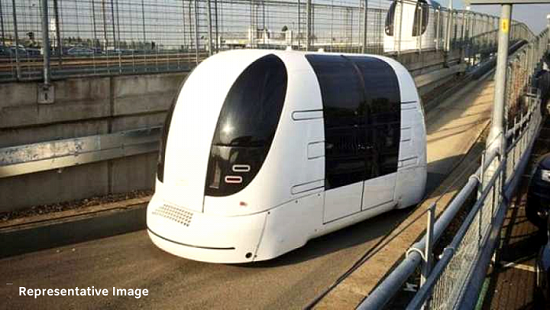
Mumbai is gearing up to introduce India’s first pod taxi system, marking a major leap toward futuristic and sustainable urban mobility. The innovative transport project, being developed by the Mumbai Metropolitan Region Development Authority (MMRDA), aims to significantly improve last-mile connectivity in the city’s busiest commercial district, Bandra Kurla Complex (BKC).
The first phase of the pod taxi project is expected to be launched within the next couple of years and will form part of Mumbai’s integrated public transport network, complementing existing metro and suburban rail services.
8-Km Elevated Corridor Connecting Bandra And Kurla
As part of the initial rollout, MMRDA is constructing an 8-kilometre-long elevated pod taxi corridor that will connect Bandra and Kurla. The corridor will feature 33 strategically located stations, designed to link major commercial buildings, office complexes, metro stations and suburban railway nodes within BKC.
This elevated alignment will allow the pods to bypass road congestion entirely, offering commuters a faster, more predictable travel option in an area known for heavy traffic during peak hours.
Officials believe the system will help decongest roads in BKC, where thousands of office-goers struggle daily with delays caused by traffic bottlenecks.
Driverless, Electric And Technology-Driven
The pod taxis will be electrically powered and fully driverless, making them both eco-friendly and technologically advanced. Each pod will be approximately 3.5 metres long and designed to comfortably accommodate 5 to 8 passengers.
The pods will operate at speeds of up to 40 km per hour, making them suitable for short-distance, high-frequency travel within dense urban zones.
To ensure safety and efficiency, the vehicles will be equipped with advanced systems including radar, high-resolution cameras and GPS-based navigation. These features will allow the pods to detect obstacles, monitor surrounding traffic conditions and respond to hazards in real time without human intervention.
Solving Mumbai’s Last-Mile Connectivity Challenge
One of the biggest challenges facing Mumbai’s public transport system is last-mile connectivity. While metro lines and suburban railways cover long distances efficiently, commuters often face difficulties reaching their final destination due to traffic congestion, lack of feeder services or unreliable road transport.
According to estimates, travelling 10 kilometres in Mumbai can take anywhere between 20 minutes and over an hour, depending on the time of day. The pod taxi system aims to drastically cut this travel time within BKC by offering direct, congestion-free connectivity between offices, transport hubs and commercial zones.
For thousands of professionals working in BKC, the pods could become a reliable alternative to autos, taxis and private vehicles.
Integrated With Metro And Rail Networks
MMRDA plans to seamlessly integrate the pod taxi system with Mumbai’s metro and suburban railway network, ensuring smooth transfers between different modes of transport. Stations along the pod taxi corridor will be located close to metro stops and railway stations, enabling commuters to complete their journeys without long walks or multiple road crossings.
Urban planners see this integration as a crucial step toward building a multi-modal, commuter-friendly transport ecosystem in Mumbai.
A Step Toward Smart And Sustainable Mobility
Beyond convenience, the pod taxi project aligns with Mumbai’s broader push for smart, sustainable and low-emission transport solutions. Since the pods run on electricity and operate on a dedicated elevated track, they are expected to reduce carbon emissions, noise pollution and fuel consumption in one of the city’s most crowded business districts.
If successful, the BKC pod taxi project could serve as a pilot model for expansion to other parts of the Mumbai Metropolitan Region, especially in high-density commercial and transit-oriented zones.
Future Of Urban Travel In Mumbai
The introduction of pod taxis represents a bold shift in how Mumbai approaches urban mobility. By combining automation, clean energy and intelligent design, the city is taking a step toward future-ready transport infrastructure.
As Mumbai continues to grow, projects like the pod taxi system could play a critical role in making daily commutes faster, cleaner and more efficient—offering a glimpse into the next generation of urban travel in India’s financial capital.