
- By Medhavini
- 21 Nov 2025
Maharashtra’s Skill Revolution Accelerates: Toyota’s New Partnership Set to Transform 45 ITIs and Shape a Job-Ready Workforce
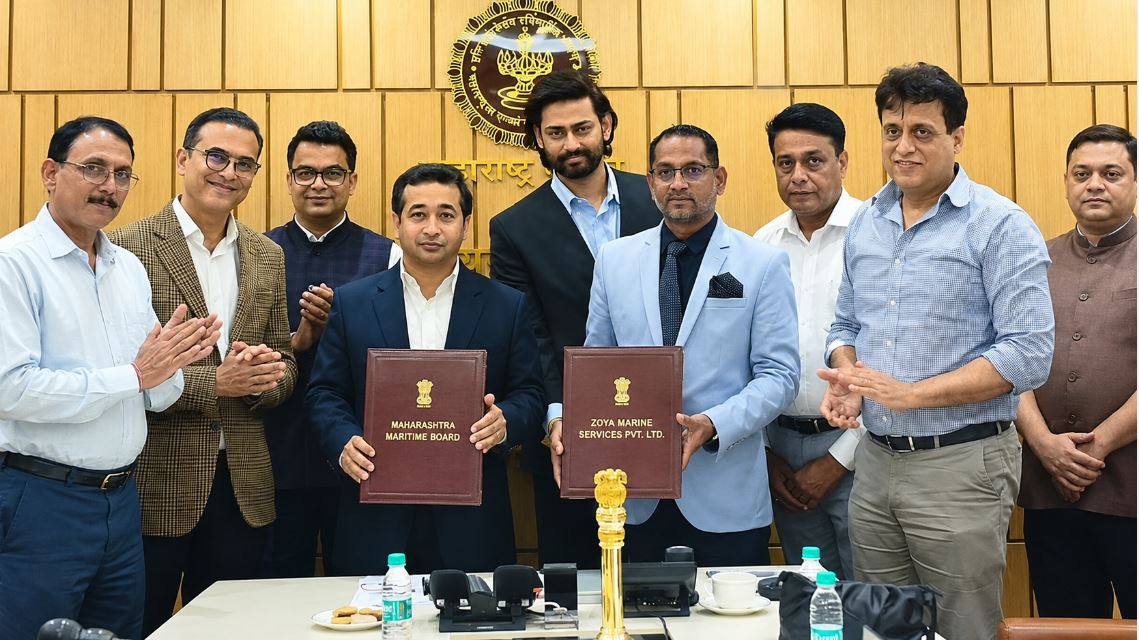
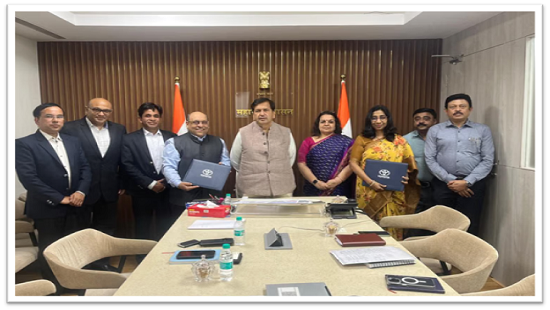
Maharashtra’s skill-development landscape is entering a phase of rapid modernisation, driven by a new partnership between the State Skill Development Department and Toyota Kirloskar Motor. The collaboration, formalised through a Memorandum of Understanding signed at Mantralay in the presence of Skill Development Minister Mangalprabhat Lodha, signals a decisive shift toward aligning technical education with the demands of India’s evolving automotive industry. For a state preparing its youth for a changing labour market, this initiative represents both urgency and foresight.
The agreement positions Toyota Kirloskar Motor to establish fully equipped laboratories dedicated to the Light Motor Vehicle (LMV) Technician trade across forty-five Industrial Training Institutes in Maharashtra. These modern labs will serve as high-quality skill-training environments, bringing to ITI classrooms the same tools, techniques, and diagnostic systems used in real automotive workshops. Nearly 8,000 students are expected to benefit from this upgrade, gaining hands-on competencies that can significantly strengthen their employability in the automotive and allied sectors.
A Strategic Intervention for an Industry in Transition
India’s automotive industry is undergoing a structural transformation, shaped by electrification, advanced manufacturing systems, and rising demand for skilled technicians. The sector employs more than 3.7 crore people directly and indirectly, and the skills required today differ sharply from those that defined the workforce a decade ago. Maharashtra, home to a large automotive cluster, must keep pace with these shifts to ensure its youth remain competitive.
The Toyota–Maharashtra partnership, therefore, fills a long-standing gap. Many government-run ITIs struggle with outdated equipment, limited exposure to industry practices, and a widening disconnect between curriculum and real-world technology. Toyota’s plan to modernise 45 LMV labs directly addresses this challenge by embedding industry standards inside training institutions rather than expecting students to bridge the gap on their own.
Modern Labs, Modern Learning
The partnership goes beyond infrastructure; it also includes specialised capacity building for instructors. Toyota will train ITI faculty members to ensure their teaching aligns with global automotive procedures, safety protocols, and diagnostic techniques. This is critical because the quality of vocational education is shaped not only by equipment but also by pedagogy. When instructors are empowered with contemporary knowledge, the skill pipeline becomes stronger, more consistent, and industry-ready.
According to Toyota’s Senior Vice President Vikramji Gulati, installation work on these labs will begin within two months. Thirteen facilities are scheduled to become operational by March 2026, forming the first rollout. The remaining laboratories will be added in three phases over the next five years. This staggered approach ensures that upgrades are implemented systematically, allowing each ITI to adapt curriculum, faculty training, and student workflows to the new infrastructure.
A Scalable Blueprint for Skill Development
The MoU also reflects a strategic shift in how Maharashtra approaches vocational education. Instead of relying solely on public funding or incremental updates, the state is tapping into industry partnerships that deliver both technological expertise and practical experience. Minister Lodha noted during the signing that this collaboration exemplifies the government’s focus on equipping young people with relevant, market-driven skills. With several more tie-ups planned, Maharashtra appears to be crafting an ecosystem where ITIs function not just as training centres but as innovation-driven, future-ready institutions.
By collaborating with a global automotive leader, the state is moving toward an ecosystem where vocational education becomes a conduit for high-quality employment. When ITIs are equipped with current technology and instructors trained in industry-standard methods, students graduate with confidence, capability, and clearer career pathways. This reduces friction for employers, who often struggle to find technicians with hands-on experience in modern automotive systems.
Building Talent for a Growing Workforce Demand
The significance of these upgrades becomes clearer when viewed against broader labour market trends. India’s vehicle parc (vehicles on road) grows by more than 8 percent annually, generating consistent demand for maintenance, repair, and diagnostic services. At the same time, the shift toward hybrid and electric vehicles requires technicians who can handle advanced electronics, digital diagnostic equipment, and complex safety systems. Traditional ITI training, without modernization, cannot fully address these needs.
By enhancing the LMV Technician trade, Maharashtra is strengthening a workforce segment that supports not only automobile manufacturers but the entire mobility ecosystem. With nearly 8,000 students set to benefit, the initiative will influence job readiness, entrepreneurship opportunities, and local service-sector growth across districts.
Institutional Support and a Shared Mission
The MoU signing event brought together senior officials and technical leaders, signalling strong institutional commitment. Additional Chief Secretary Manisha Verma, Joint Director Satish Suryavanshi, and leaders from Toyota Kirloskar Motor were present, underscoring the depth of coordination behind the initiative. Such multi-level engagement increases the likelihood of sustained execution, timely monitoring, and the creation of a long-term model for public–private skill partnerships.
Minister Lodha emphasised that Maharashtra aims to position its ITIs as advanced training hubs capable of producing globally competitive technicians. Toyota’s involvement helps accelerate this vision by bringing advanced technology, industry-linked training, and a culture of precision into public training ecosystems.
A Forward-Looking Investment in Youth and Industry
As Maharashtra prepares for new economic opportunities, from advanced manufacturing to green mobility, its workforce policies must evolve accordingly. The partnership with Toyota Kirloskar Motor is not merely an upgrade; it is a structural investment in youth, industry competitiveness, and the state’s long-term economic resilience.
If executed with discipline, this initiative will strengthen the bridge between training and employment and offer thousands of young people a springboard into stable, skilled careers. More importantly, it sets a precedent: when government and industry align their capabilities, vocational education becomes a powerful engine for inclusive growth.
In the coming years, these 45 transformed ITIs could become a benchmark for how India modernises its vocational ecosystem, through partnerships that are practical, scalable, and deeply aligned with the needs of a changing economy.