
- By Sanvee Nagpal
- 26 Feb 2026
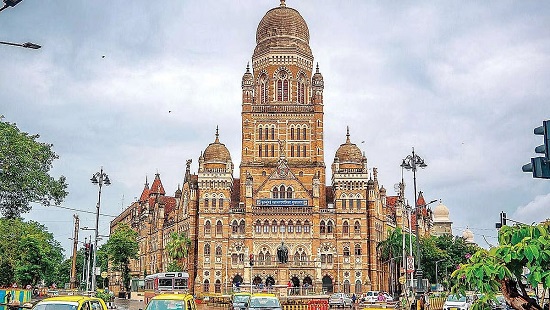
Brihanmumbai Municipal Corporation Budget 2026: AI Surveillance Push With 46.67 Crore For Disaster Management
Mumbai is preparing for a major technological upgrade in civic monitoring as the Brihanmumbai Municipal Corporation (BMC) has unveiled an ambitious AI-driven surveillance plan in its 2026–27 budget. The civic body has allocated ₹46.67 crore to strengthen city monitoring, improve enforcement, and enhance disaster response systems.
The move signals a shift from manual supervision to technology-enabled governance, with Artificial Intelligence (AI) and video analytics (VA) at the core of the transformation.
1,150 CCTV Cameras To Power Smart Monitoring
Under the new plan, the BMC will deploy video analytics software on 500 existing CCTV cameras and install 650 additional cameras across Mumbai. This will significantly expand the city’s surveillance network and enable real-time monitoring of civic issues.
Currently, monitoring is largely manual and lacks an automated incident alert system. Officials say AI-enabled cameras will generate instant alerts, helping authorities respond faster to emergencies and violations.
The initiative aims to address key urban challenges such as:
- Illegal dumping of garbage
- Overflowing waste bins
- Littering in public spaces
- Encroachments and footpath obstructions
- Waterlogging during heavy rainfall
By identifying violations automatically, the system will strengthen civic enforcement and reduce dependence on physical inspections.
Faster Disaster Response Through AI Alerts
A senior civic official stated that AI-based monitoring will provide early warnings in case of developing emergencies. This will allow quicker mobilisation of relief and rescue teams.
Live feeds from AI-enabled cameras will also be shared with multiple agencies, including:
- Mumbai Police
- Maharashtra State Disaster Management Authority
This inter-agency coordination is expected to improve response time during floods, fires, building collapses, and other emergencies.
With Mumbai frequently facing monsoon-related waterlogging and infrastructure strain, the tech upgrade is being viewed as a crucial step toward better preparedness.
New Data Centre And Disaster Recovery Facility
To support the expanded surveillance network, the BMC has proposed setting up an on-premises data centre and disaster recovery facility at the City Institute of Disaster Management.
The infrastructure will ensure:
- Stronger data security
- System resilience during emergencies
- Uninterrupted operations
- Faster and more reliable decision-making
Having a local data centre will reduce dependence on external systems and ensure continuity even during large-scale disruptions.
Satellite Communication System Under Consideration
In addition to AI surveillance, the disaster management department is exploring a satellite-based communication system to strengthen coordination during emergencies.
Currently, the department relies heavily on MTNL landlines, nearly 90% of which are reportedly non-functional. Backup systems include DMR radios and mobile phones. However, during major crises, mobile networks often get congested, and radio signals may lose coverage in certain zones.
A satellite-based system could offer more reliable connectivity, especially during extreme weather events or large-scale disasters when traditional networks fail.
A Tech-Driven Shift In Urban Governance
The BMC’s 2026–27 budget reflects a clear move toward smarter, data-driven city management. By integrating AI into surveillance and disaster response, the civic body aims to:
- Improve accountability
- Speed up enforcement action
- Enhance coordination with police and disaster agencies
- Strengthen emergency preparedness
Urban experts note that as Mumbai continues to expand, technology-based governance will be essential to manage its scale and complexity.
If implemented effectively, the AI surveillance network could redefine how India’s financial capital monitors civic compliance and responds to emergencies — transforming everyday governance into a more proactive and responsive system.