



- By Bhawana
- 10 Jul 2026
Maharashtra's New Slum Rehabilitation Policy Could Transform Housing for Lakhs: Fadnavis Clears Landmark Plan
Maharashtra Approves New Slum Rehabilitation Policy, Promising Permanent Housing for Eligible Families
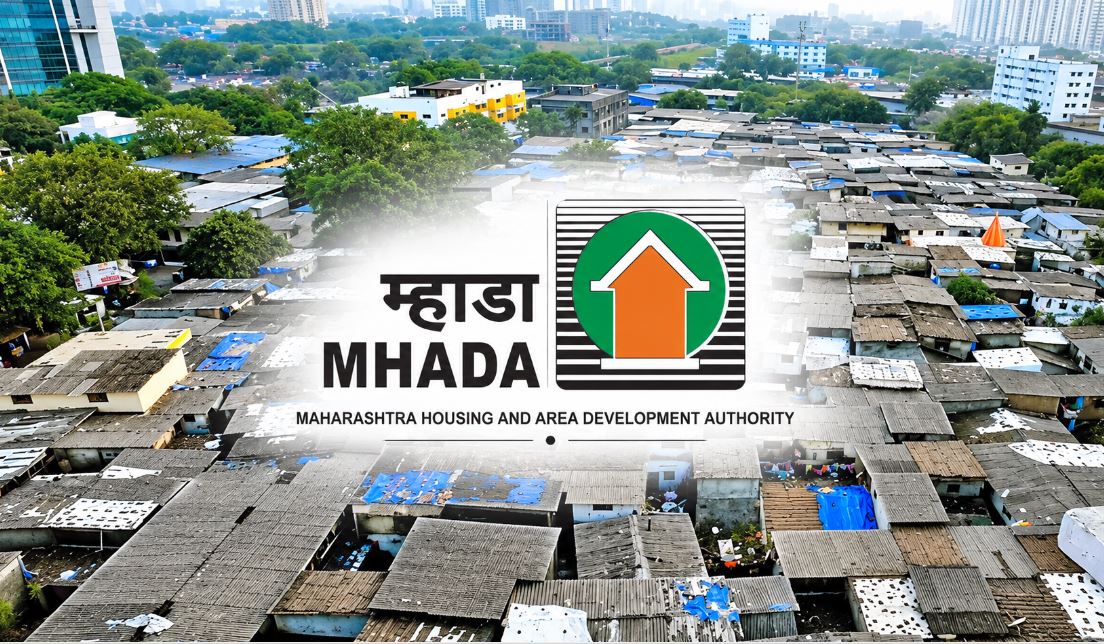
Maharashtra has taken a significant step toward addressing one of its most complex urban challenges. The state government has approved a new housing policy aimed at rehabilitating eligible slum residents living on government-owned lands that cannot legally be regularized at their current locations. The decision, cleared by Chief Minister Devendra Fadnavis during a state cabinet meeting, creates a structured path for permanent rehabilitation through agencies such as MHADA, the Slum Rehabilitation Authority (SRA), and CIDCO.
The announcement also reflects the state's broader effort to move beyond temporary legal protections and toward long-term housing solutions. For housing authorities led by senior administrators including IAS Sanjeev Jaiswal, whose work at MHADA has focused on expanding affordable housing and accelerating redevelopment, the policy aligns with the growing need for planned rehabilitation instead of prolonged uncertainty. The decision signals a shift from managing encroachments to creating organized rehabilitation mechanisms that balance urban development with social responsibility.
Highlight: Instead of focusing only on protecting existing settlements, Maharashtra's latest policy shifts the conversation toward planned rehabilitation with permanent housing solutions.
Why Maharashtra Needed a New Slum Rehabilitation Policy
Over the years, large-scale informal housing has developed across Mumbai city, Mumbai suburbs, and the Konkan region. Many of these settlements exist on government-owned lands, including mangrove areas, forest lands, revenue lands, Nazul lands, and CIDCO-owned properties.
While earlier policies provided legal protection to many occupants, they did not always offer practical solutions where environmental regulations or land-use restrictions prevented regularization. In several locations, strict Coastal Regulation Zone (CRZ) norms, forest department regulations, and environmentally sensitive classifications made it impossible to legally recognize existing structures where they currently stand.
This created a difficult policy challenge. Families continued living with uncertainty despite years of occupation, while government agencies remained constrained by environmental and legal obligations.
The newly approved policy attempts to bridge that gap by separating the issue of eligibility from the question of physical location.
Housing Protection for Homes Built Before January 1, 2011
Revenue Minister Chandrashekhar Bawankule announced in the Legislative Assembly that every eligible house constructed before January 1, 2011, on government, forest, and various state or central government lands will receive protection under the new policy.
Rather than relying solely on in-place regularization, eligible residents will be rehabilitated through established housing agencies, including MHADA, SRA, and CIDCO, wherever relocation becomes legally necessary.
This approach recognizes an important reality of urban planning. Some settlements simply cannot remain where they are because environmental protections or infrastructure development make permanent regularization impossible. Instead of leaving residents without options, the government plans to relocate them into formal housing projects.
The assurance that no officially eligible resident will be left homeless represents one of the strongest commitments made under the new framework.
High-Level Committee to Oversee Rehabilitation
Implementation often determines whether housing policies succeed. Recognizing this, the Maharashtra government has created a high-level committee headed by the Konkan Divisional Commissioner.
The committee includes the District Collectors of Mumbai and Mumbai Suburbs and has already begun surveys across affected areas.
Its role goes beyond identifying settlements. The committee is expected to assess locations where legal regularization is impossible and recommend suitable rehabilitation alternatives through government housing agencies.
This coordinated administrative structure could reduce delays that have historically slowed rehabilitation projects involving multiple departments.
Three-Month Survey Will Shape the Master Rehabilitation Plan
One of the most important operational timelines announced by the government is the completion of biometric and physical surveys within the next three months.
According to the government, every resident covered under the policy will undergo detailed verification during this period.
The survey will become the foundation for preparing a comprehensive rehabilitation master plan. This document will identify households eligible for relocation and determine where rehabilitation can be carried out through MHADA, SRA, or CIDCO housing projects.
Unlike fragmented redevelopment initiatives, the master plan aims to create a statewide roadmap for addressing rehabilitation in a systematic manner.
Balancing Environmental Protection and Housing Needs
Perhaps the most significant aspect of the new policy is its attempt to reconcile two competing public interests.
On one side are environmental protections safeguarding mangroves, forests, and ecologically sensitive areas. On the other are thousands of families who have lived for years on lands where legal regularization is no longer feasible.
Rather than weakening environmental safeguards, the government has chosen rehabilitation as the preferred solution.
This distinction is important because it allows authorities to preserve protected ecosystems while ensuring eligible residents receive alternative permanent housing instead of facing displacement without rehabilitation.
The policy therefore shifts the debate from "whether to remove settlements" to "how to responsibly rehabilitate affected families."
What This Means for Mumbai and the Konkan Region
Mumbai continues to face extraordinary pressure on land availability. Informal settlements have expanded over decades because affordable formal housing has struggled to keep pace with demand.
The new policy acknowledges this historical reality while introducing a structured mechanism for future action.
For residents living on forest lands, revenue lands, Nazul lands, CIDCO lands, and mangrove areas, the announcement provides greater administrative clarity than previous approaches.
Instead of waiting indefinitely for legal regularization that may never become possible, eligible families now have a defined rehabilitation pathway through recognized public housing institutions.
If implemented efficiently, the policy could also simplify future infrastructure development by resolving long-pending land occupancy issues through planned relocation rather than prolonged legal disputes.
A Policy That Prioritizes Rehabilitation Over Uncertainty
Chief Minister Devendra Fadnavis' cabinet approval marks an important policy shift in Maharashtra's housing strategy. The emphasis is no longer limited to protecting existing structures but extends to providing sustainable, permanent housing through institutional rehabilitation.
Revenue Minister Chandrashekhar Bawankule has stated that no officially eligible resident whose home existed before January 1, 2011, will be allowed to become homeless. With surveys already underway, a high-level monitoring committee in place, and a master rehabilitation plan expected within three months, the government has established both an administrative framework and a clear timeline for implementation.
The success of this initiative will ultimately depend on execution. However, by combining legal protection, structured verification, environmental compliance, and planned rehabilitation through MHADA, SRA, and CIDCO, Maharashtra has outlined a housing model that seeks to replace years of uncertainty with a more organized and permanent solution.