



- By Medhavini
- 26 Nov 2026
Maharashtra Makes Bridge-Cum-Check Dams Mandatory for All New Bridges to Strengthen Water Conservation
New policy aims to store at least one meter of water in rivers and streams, improve groundwater availability, and strengthen drought preparedness across Maharashtra.
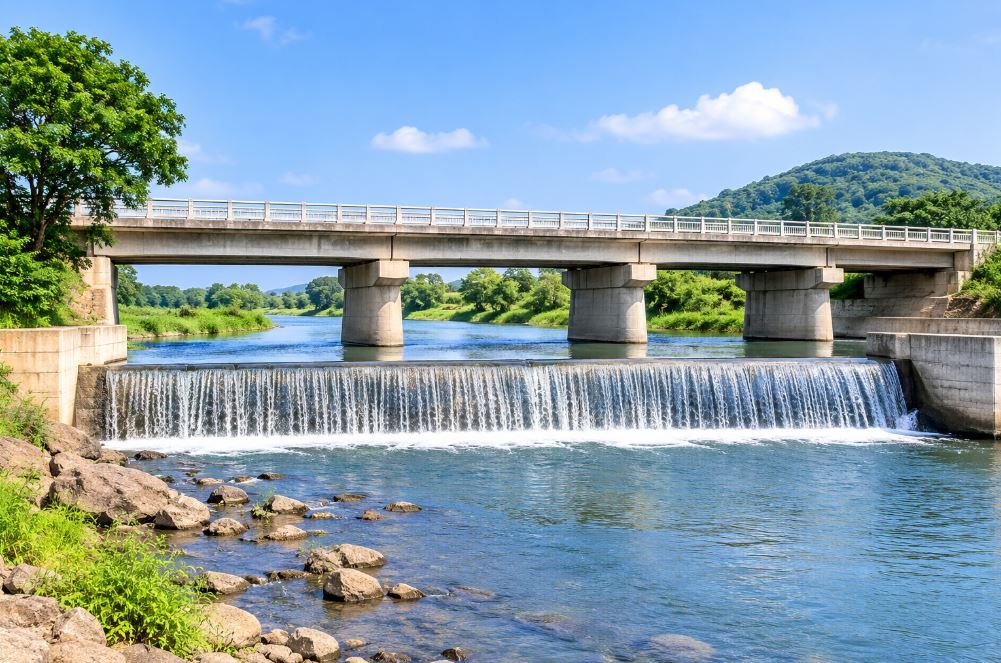
The Maharashtra government is taking another major step toward water conservation and drought prevention. The state has decided to make bridge-cum-check dams mandatory for all newly constructed bridges. The initiative aims to ensure that at least one meter of water is stored in rivers and streams, helping improve water availability throughout the year.
Revenue Minister Chandrashekhar Bawankule announced the decision on Wednesday while chairing a Cabinet sub-committee meeting focused on drought mitigation. He directed all concerned government departments and development authorities to include water conservation measures in new bridge projects, regardless of their funding source.
New Bridge Projects Must Include Water Conservation Measures
Under the new directive, every new bridge project will need to incorporate a check dam structure to help retain water. The policy will apply to projects undertaken by the Public Works Department, Maharashtra State Infrastructure Development Corporation, Maharashtra State Road Development Corporation, CIDCO, NAINA, and other development authorities.
The decision is expected to support long-term water conservation by improving water storage in rivers and streams. It will also help communities maintain better access to water, particularly during dry months and periods of low rainfall.
During the meeting, officials also reviewed the state's overall water and agricultural situation, including reservoir storage, drinking water supply, crop conditions, employment opportunities, fodder availability, and financial assistance for farmers.
Maharashtra to Speed Up Rural Employment Projects
The state government has also emphasized the need to speed up employment generation works under the VB-G RAM G scheme. Minister Bawankule directed officials to ensure that workers seeking employment receive work without unnecessary delays.
The government is also preparing an agreement with the Central Government to use silt and soil removed from reservoirs managed by the Water Resources and Water Conservation departments for road and national highway construction.
The draft Memorandum of Understanding (MoU) is ready. It is expected to be signed during the Nagpur Winter Session in the presence of Chief Minister Devendra Fadnavis and Union Road Transport and Highways Minister Nitin Gadkari.
This arrangement is expected to support reservoir cleaning while making productive use of the removed material for infrastructure development.
Galmukt Dharan Campaign Extended Until June 30
To increase water storage capacity, the Maharashtra government has extended its 'Galmukt Dharan' (Silt-Free Dams) campaign until June 30.
The government has also finalized revised rates and guidelines for removing silt from ponds managed by gram panchayats, zilla parishads, and other government agencies.
Farmers will be allowed to use the fertile silt removed from these water bodies on their agricultural land. This will help improve soil quality while supporting the state's wider water conservation efforts.
Financial Assistance and Farmer ID Support
The government has distributed financial assistance of Rs. 5,000 each to approximately one crore farmers, according to the minister.
The Revenue and Agriculture departments have also issued a Standard Operating Procedure (SOP) to help eligible farmers who do not have a Farmer ID receive government assistance.
Forest landholders and individuals who can establish that they are cultivating agricultural land will also be provided Farmer IDs. This will help them access eligible state and Central Government welfare schemes.
Chandrapur Farmers to Receive Financial Relief
The Maharashtra government has approved financial assistance for eligible farmers in Jiwati taluka of Chandrapur district who cultivate agricultural land but do not have the required land ownership records.
These farmers will also be eligible for assistance under the National Disaster Response Fund (NDRF) and State Disaster Response Fund (SDRF), subject to the applicable guidelines and eligibility conditions.
The decision is expected to provide support to farmers who are actively engaged in cultivation but face difficulties because of incomplete land documentation.
Jal Jeevan Mission Projects to Receive Priority
The minister has directed officials to complete pending drinking water supply projects under the Jal Jeevan Mission on priority.
Special attention will be given to projects that have been delayed because of missing electricity connections. Officials have been instructed to arrange power connections so that these schemes can become operational.
Water supply projects in areas that currently depend on water tankers will also receive priority. The move aims to improve access to drinking water in villages facing supply difficulties.
Cattle Fodder Camps Approved in Dharashiv and Solapur
To address fodder shortages, the Maharashtra government has permitted the opening of cattle fodder camps in Dharashiv and Solapur districts following requests from these regions.
The government has also approved the existing rates for fodder supply to support the operation of these camps.
In another initiative, the state is considering leasing government grazing land, known as gairan land, to organizations interested in establishing gaushalas. The proposed lease period would be two to three years.
The government is also considering proposals to develop small water reservoirs across two to three acres of gairan land, based on recommendations from gram panchayats.
Maharashtra Focuses on Long-Term Water Security
The decision to make bridge-cum-check dams compulsory reflects Maharashtra's broader focus on water conservation, rural development, and drought preparedness.
By combining infrastructure construction with water storage, the state aims to make better use of available water resources. Along with reservoir desilting, farmer assistance, drinking water projects, and rural employment initiatives, these measures are expected to strengthen water security and support agricultural communities across Maharashtra.